
Amalienborg in Copenhagen: the heart of the Danish monarchy
A living symbol of the Danish monarchy, this architectural complex now houses the residence of the Danish royal family.

Below, we detail the various palaces that make up the square, along with our tips for making the most of the changing of the guard.
Amalienborg Palaces
4 castles
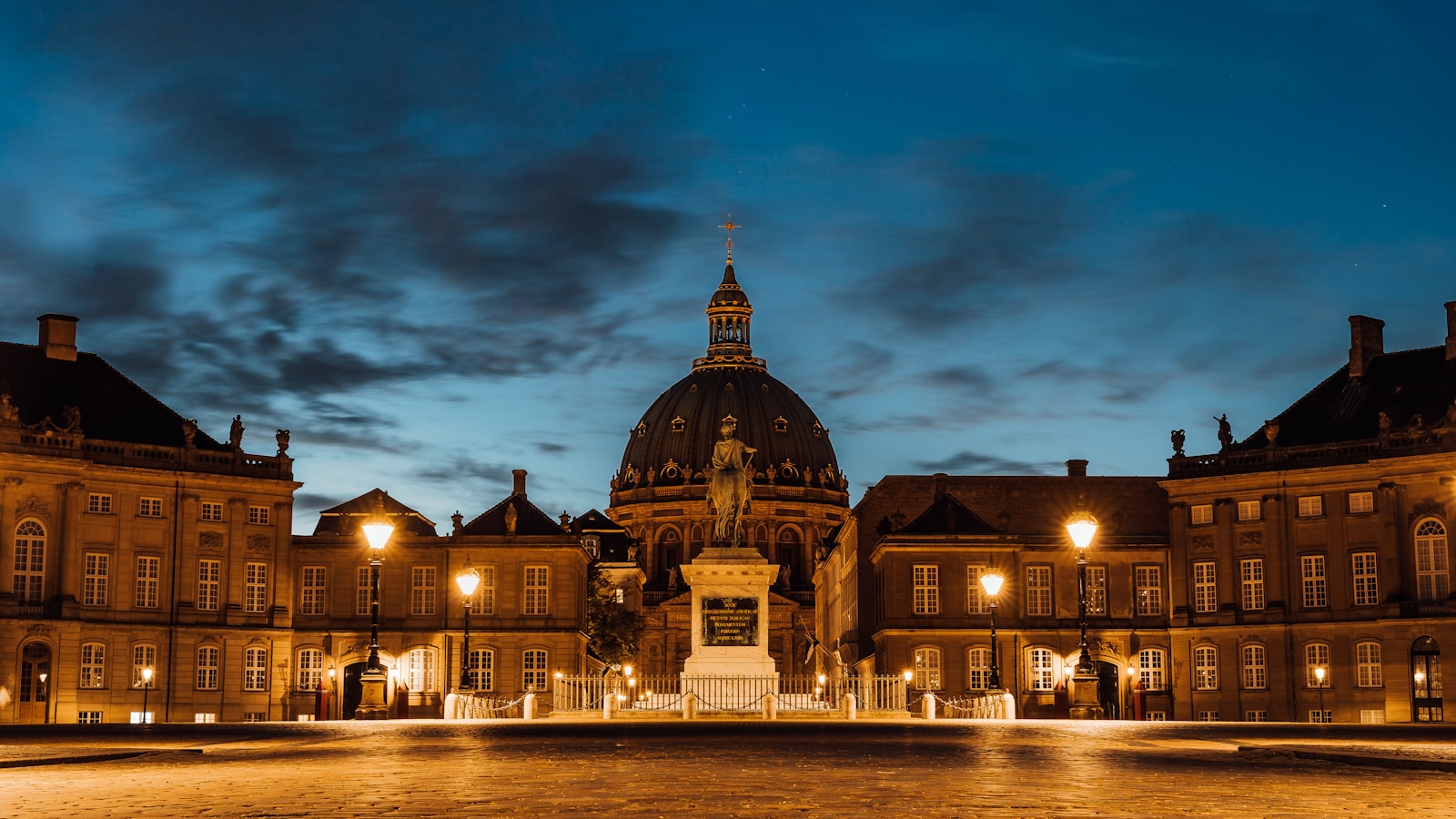
Amalienborg is not a single palace, but a group of four magnificent buildings arranged around a vast octagonal square.
Each palace is named after a Danish king and reflects a distinct period of royal history.
- Christian VIII’s palace, part of which has been converted into a museum, offers a fascinating insight into the life of the royal family over the centuries.
- The palace of Christian VII, often used for official receptions, is a masterpiece of the Rococo style. Guided tours explain how the palace has been used over time to showcase the power and prestige of the Danish monarchy.
- Frederik VIII Palace is the private residence of Crown Prince Frederik and his family. It was here that the future King and Queen Mary of Denmark raised their children, perpetuating royal traditions.
- Christian IX’s palace, also known as Schack Palace, the d’hive residence of Queen Margrethe II, is the very heart of the Danish monarchy. Although not every palace is accessible to visitors, the exterior architecture alone is impressive in its grandeur and elegance.
To learn more about the Danish monarchy, you can also explore sites such as Christiansborg Castle, the National Museum of Denmark and Rosenborg Castle, both within walking distance.
Where is Amalienborg square?
Amalienborg Square is located in the Indre By district of central Copenhagen, close to the Nyhavn Canal.
Amalienborg Museum
Visit and tickets: Amalienborg Museum
Address
Amalienborg Slotsplads, 1257 København K, Denmark
Amalienborg is within easy reach of central Copenhagen, and around 15 minutes from Nyhavn, one of Copenhagen’s most emblematic districts.
By metro: Marmorkirken stop, red (3) and blue (4) lines
Prices and tickets
Adult: 125 DKK (approx. €16)
City Pass
👉 Free entry to the site with Copenhagen City Pass + unlimited public transport.
⌛ Tour lasts 1 hour on average.
For those who want to see the splendors of the royal residences up close, Christian VIII’s palace houses a small museum that traces the history of the Danish royal family and features beautifully preserved interiors.
Each room tells its own story, from the richly decorated drawing rooms to the private chambers of former kings and queens. The furniture, works of art and personal objects on display offer a unique insight into the daily life of the royal family, far from the public eye. A complete family tree helps you find your way around all these kings and queens.
The museum also features temporary exhibitions on various aspects of the Danish monarchy, from royal fashion to contemporary art. It’s a rare opportunity to see how the monarchy evolves while respecting its centuries-old traditions.
These exhibits are particularly interesting for days out if you’re visiting Copenhagen in winter, offering shelter while immersing you in the fascinating history of the Danish monarchy.
The Changing of the Guard at Amalienborg
A show not to be missed
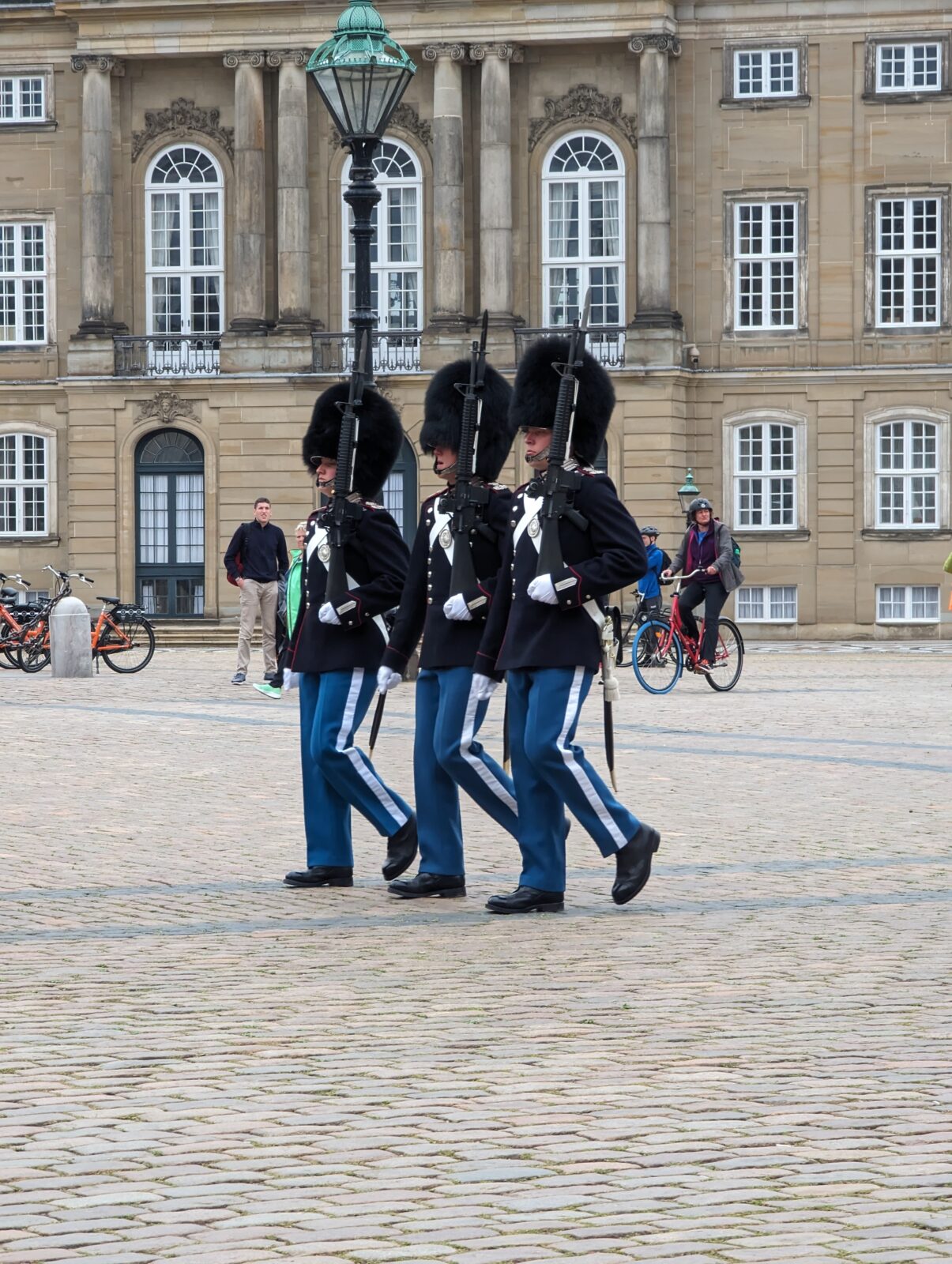
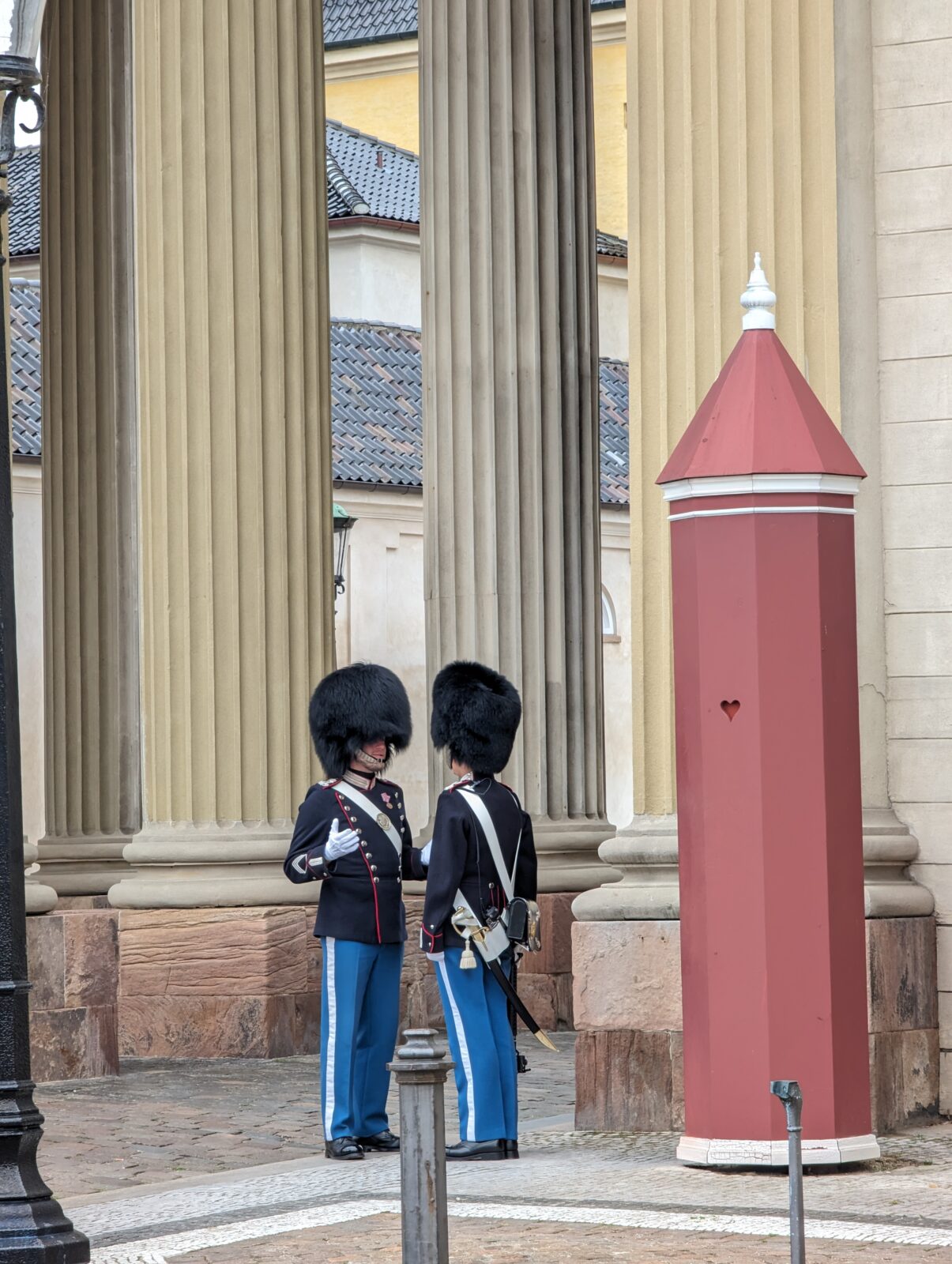
One of the highlights of any visit to Amalienborg is the daily changing of the Royal Guard. Every day at noon, the Royal Guard, dressed in their dark blue uniforms and famous bearskin caps, marches from Rosenborg barracks to Amalienborg. The spectacle is both solemn and impressive, with military precision and exemplary discipline.
If you’re lucky enough to visit Amalienborg on a day when the Queen is present, you’ll be treated to a musical changing of the guard, with the military band accompanying the guards, adding an extra dimension to this already majestic ceremony.
👉 In high season, we advise you to get there early in order to find a place and sufficient visibility.
Discover our ideal itinerary for a weekend in Copenhagen.

The role of the Danish Royal Guard
The Royal Guard is not just a spectacle for tourists. It plays a crucial role in protecting the royal family and royal residences. In addition to their ceremonial duties, the guards are trained soldiers, ready to respond to any threat. Their presence at Amalienborg is a constant reminder of the importance of the monarchy in Danish life.
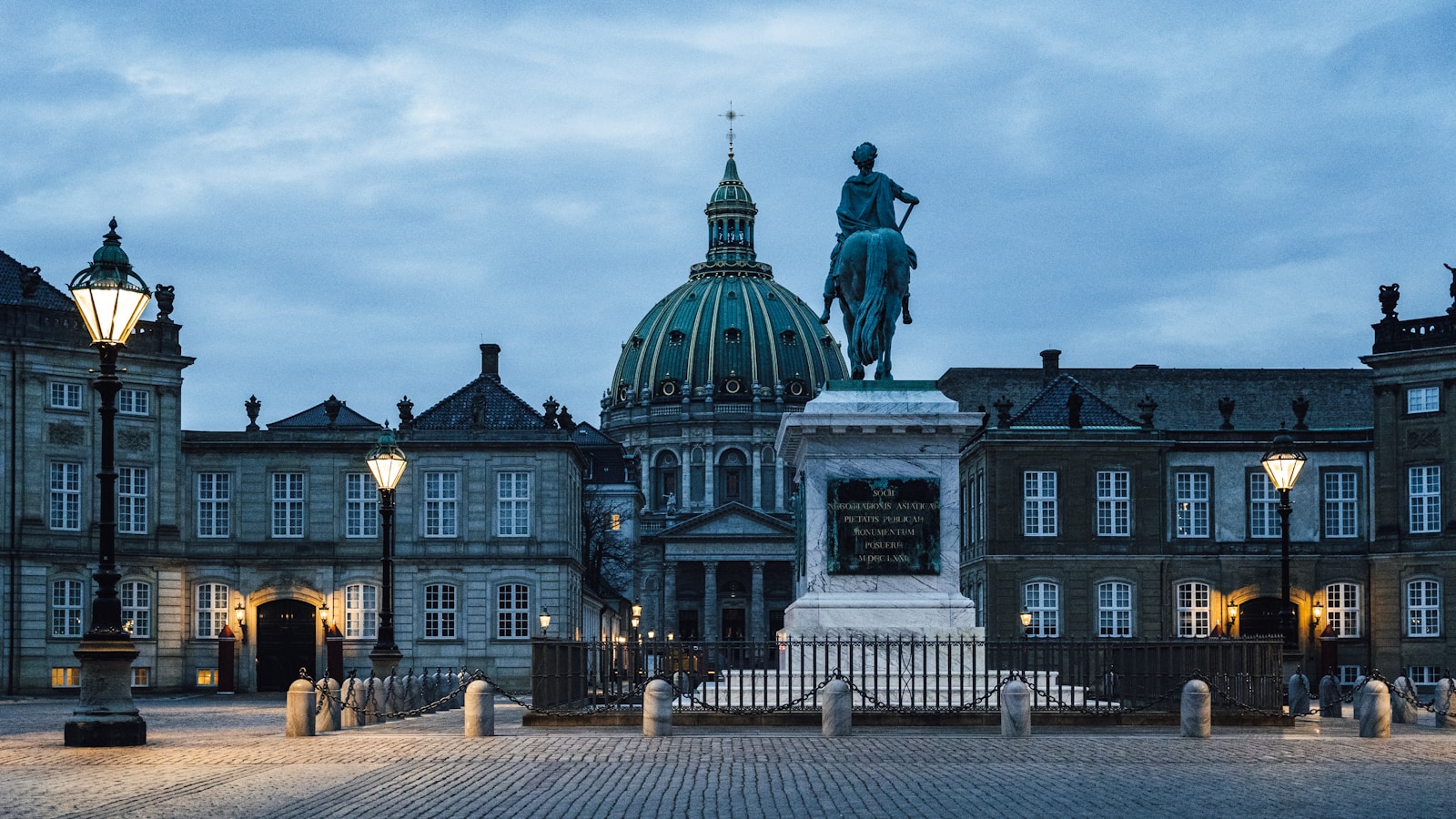
Amalienborg square
Architecture and points of interest
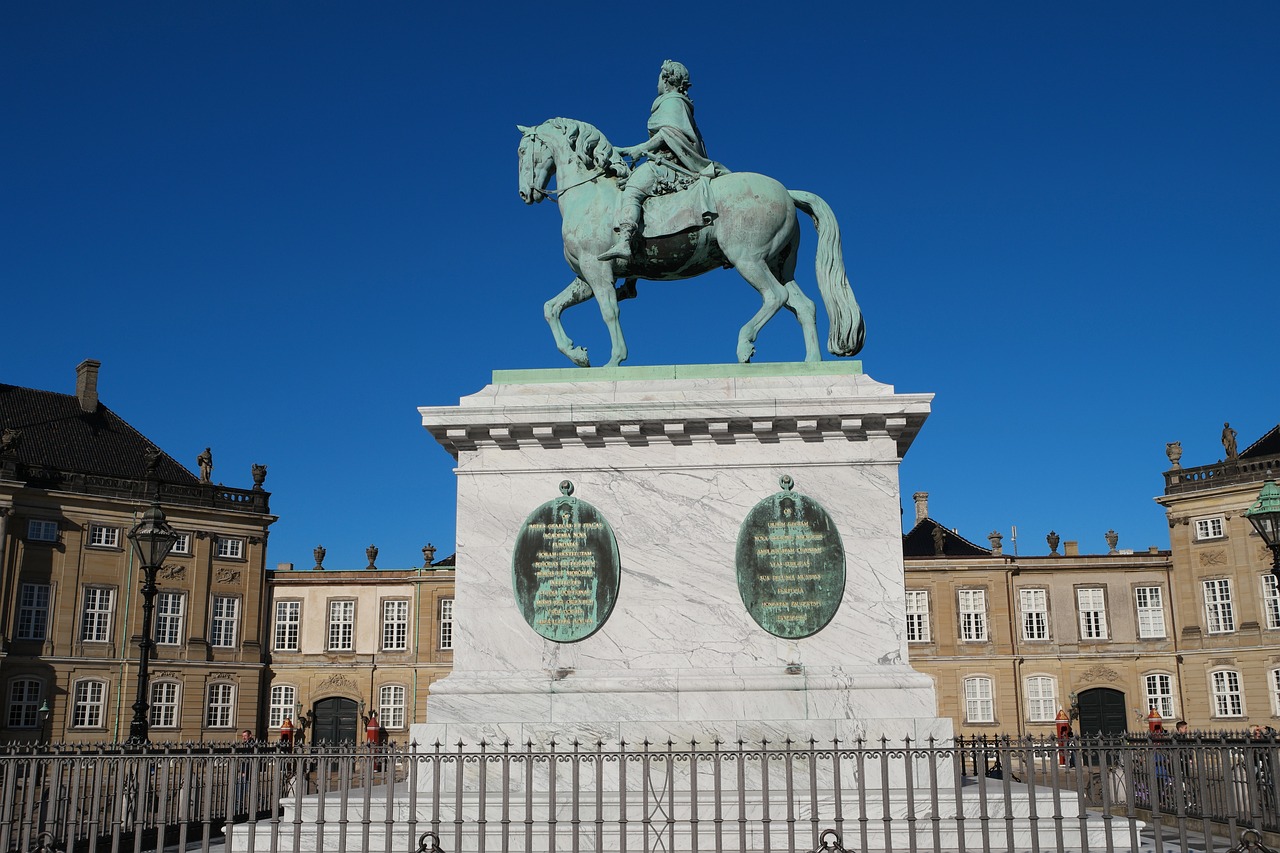
At the center of the square stands the equestrian statue of Frederick V, a masterpiece of Baroque sculpture symbolizing the power and grandeur of Denmark at the time.
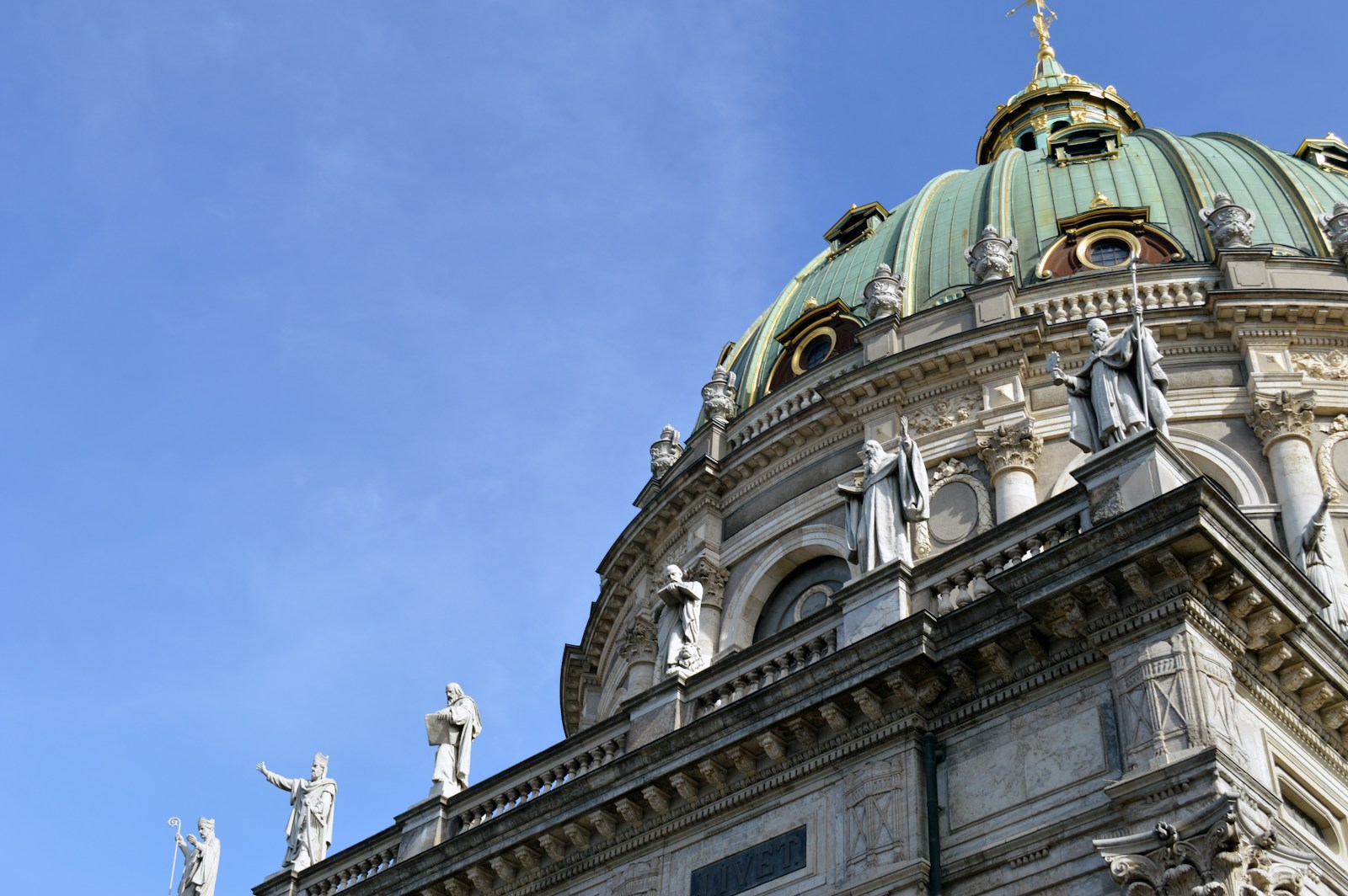
You can also admire the view of Frederik’s church, also known as Marmorkirken, whose imposing dome dominates the landscape.
The equestrian statue of Frederick V
The equestrian statue of Frederick V, erected in 1771, is one of the most beautiful in Europe. Created by French sculptor Jacques-François-Joseph Saly, it depicts the king in Roman costume, symbolizing the continuity between ancient Rome and modern Denmark. The statue is a focal point of Amalienborg Square and a testimony to Denmark’s golden age.
The choice of depicting Frederick V as a Roman emperor was not an insignificant one. It reflects the king’s ambition to reinforce the prestige of his dynasty and project an image of power and stability. Today, this statue remains a symbol of Danish royal history and a must-see for anyone visiting Amalienborg.
Where to take the best photo of the square?
👀Photo spots :
- On foot or by bike in Copenhagen: to get a good view of the square, we recommend you go across the street to the Copenhagen Opera House.
- By boat: you can opt for a boat cruise, with audio guide in French. From the canal, the view of the Nyhavn district, Amalienborg and other emblematic monuments is truly spectacular, and a cruise will also allow you to see places like the Christiania and Reffen districts.
🌟Tip: opt for the Copenhagen City Pass to save money on your vacation.
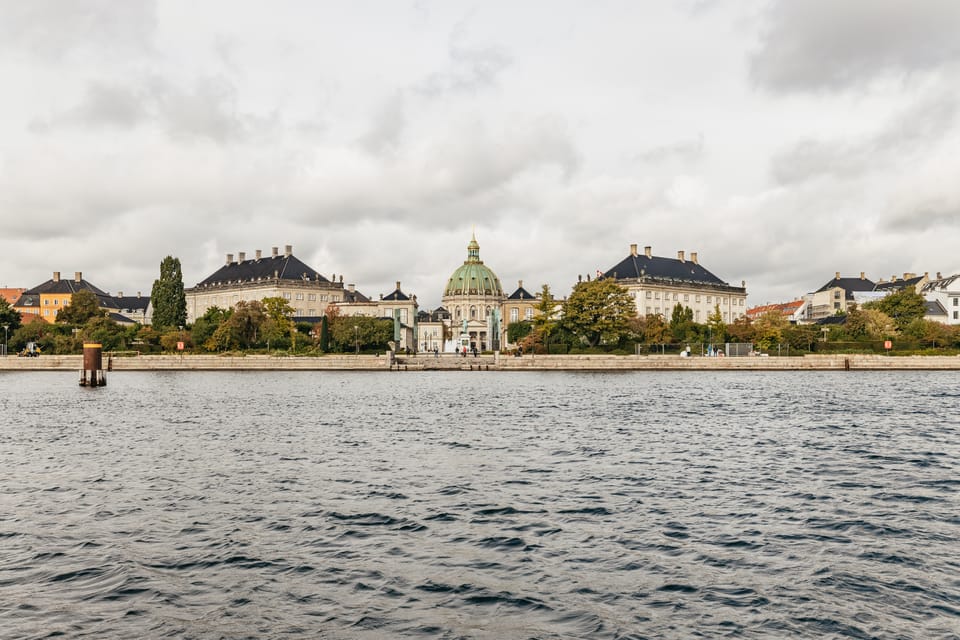
Amalienborg in Video
🍕 2 final tips: as you leave the square, we recommend the small fast food restaurant Madbaren Marmorkirken, with its excellent sandwiches and pizzas.
❤️ We recommend staying at the Wakeup Copenhagen, a great hotel just 2 steps from the square.
On your way out of the palace, don’t forget to visit Copenhagen’s other gems, such as the Nyhavn canal, Christiansborg Castle and Tivoli Park, one of the world’s oldest amusement parks, which is sure to please the whole family.

